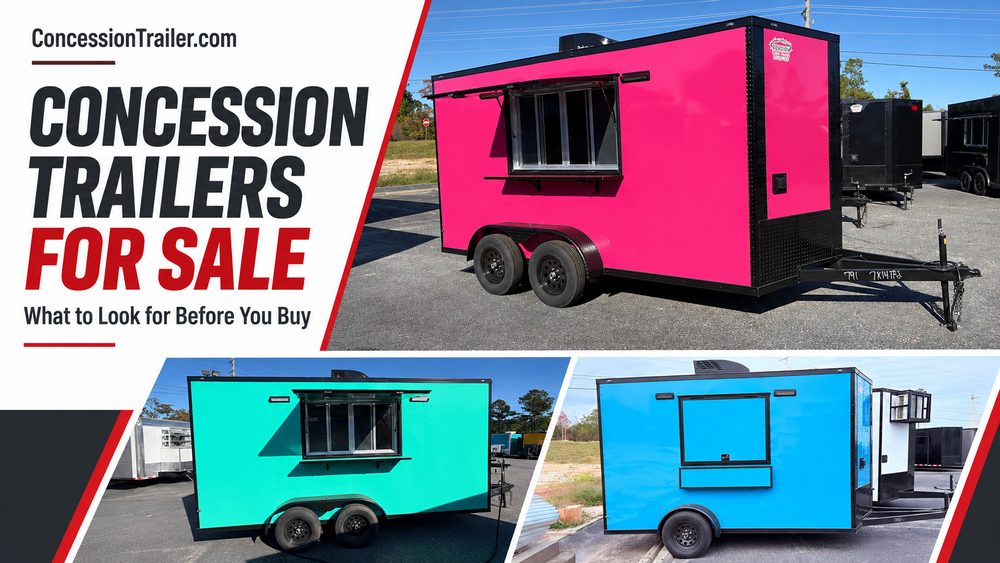
A serving window and a good price can catch your attention. But the right concession trailer needs to work just as well during a busy lunch rush as it looks in the photos.
Before you buy, think about what you will serve, where you will operate, and what equipment you need. A coffee trailer, barbecue business, and full-service mobile kitchen can require very different setups.
This guide will help you compare concession trailers for sale and ask the questions that matter before making your purchase.
Start With Your Menu
Your menu should guide your trailer choice. Start by writing down what you plan to sell and how each item will be stored, prepared, cooked, and served.
For example, a beverage business may need room for ice, refrigeration, drink equipment, and cup storage. A burger operation may need a griddle, refrigeration, food preparation space, and a ventilation system suited to its cooking equipment.
Ask yourself:
- What preparation will happen inside the trailer?
- Which appliances will run at the same time?
- How much refrigerated and dry storage will you need?
- How many people will work inside?
- Will your menu change as the business grows?
A trailer that fits your equipment but leaves no room to work can become frustrating quickly.
Check Local Requirements Before You Commit
Before purchasing a trailer or finalizing a custom build, contact the health department or other food-service authority where you plan to operate. Ask which agency will review your plans and what information it needs.
Have your proposed menu, floor plan, equipment list, and plumbing details ready. Reviewing these items early can help you identify changes before equipment is purchased or installed. The FDA’s plan-review guidance specifically emphasizes finding layout and utility problems while they are still on paper. FDA
Questions to discuss with your reviewing agencies include:
- What sinks, water tanks, and hot-water system does my operation need?
- Is a commissary or base of operation required?
- Which equipment certifications are accepted?
- What ventilation and fire-protection systems are required for my cooking equipment?
- What inspections and approvals must be completed before opening?
A trailer advertised as “fully loaded” still needs to match your menu and the requirements of the place where you will operate.
Choose a Size That Fits the Work
More floor space can be useful, but a longer trailer also affects towing, parking, storage, and access to vending locations.
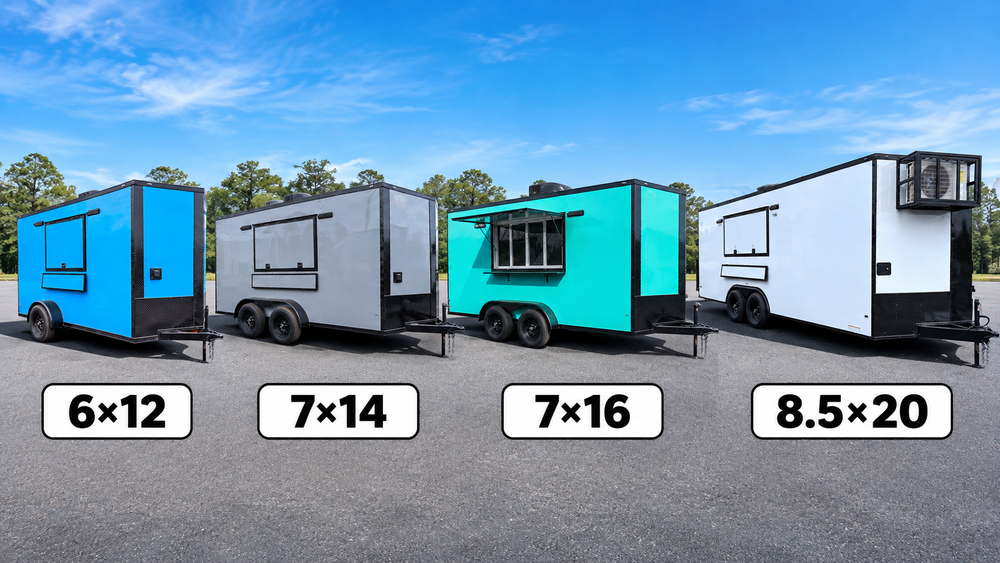
Use these sizes as starting points for comparison rather than fixed rules:
| Trailer size | What to consider |
|---|---|
| 6×12 | A compact setup with a focused menu and carefully planned equipment |
| 7×14 | Additional room for preparation, storage, and serving |
| 7×16 | More flexibility for equipment placement and staff movement |
| 8.5×20 or 8.5×24 | Larger kitchen layouts with more equipment and workspace |
Ask for the actual interior dimensions. Sinks, counters, wheel wells, cabinets, and appliances all reduce usable space.
Check interior height, too—especially if you are tall or plan to install overhead equipment.
Walk Through the Layout Before You Buy
Imagine a customer ordering your most popular item. Follow every step from taking payment to handing over the finished order.
Can one person prepare food while another serves? Can the refrigerator open without blocking the aisle? Is packaging within reach of the serving window?
Look closely at:
- Preparation space beside cooking equipment
- Access to sinks and handwashing facilities
- Refrigerator and cabinet door clearance
- Storage for food, utensils, and cleaning supplies
- A clear route through the working area
- Access to equipment for cleaning and service
A practical floor plan helps your crew work without constantly stepping around each other.
Know What the Price Actually Includes
Two concession trailers of the same size can have very different prices because their equipment packages are different.
One may include sinks, air conditioning, electrical service, and a serving window. Another may also include refrigeration, cooking equipment, a hood, and fire suppression.
Request a written list of included equipment and options.
| Item | What to confirm |
|---|---|
| Cooking equipment | Appliance types, sizes, model numbers, and fuel requirements |
| Refrigeration | Included units, storage capacity, and electrical needs |
| Ventilation | Hood type, coverage, exhaust, and any makeup-air provisions |
| Fire suppression | Whether included and appropriate for the proposed cooking line |
| Water system | Tank capacities, pump, water heater, sinks, and connections |
| Electrical system | Supply connection, panel, circuits, outlets, and equipment loads |
| Generator | Whether the generator itself is included or only its mounting area |
| Air conditioning | Unit type, capacity, and power requirements |
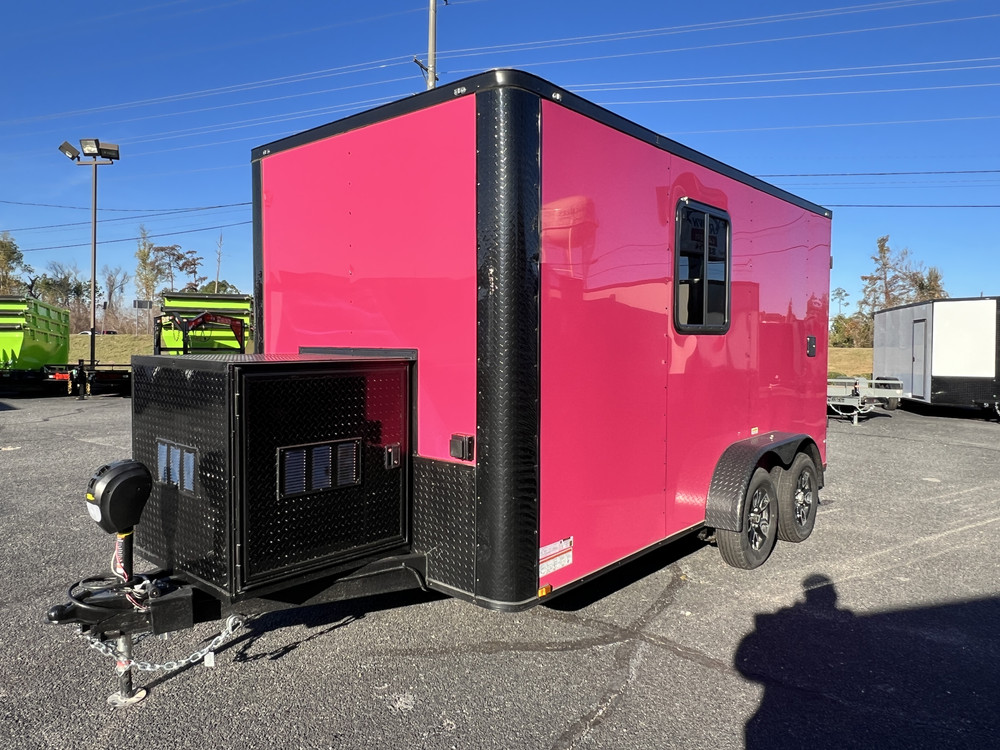
A generator box is not the same as an included generator. Likewise, a sink package does not tell you everything about the water system.
Match the Electrical Package to Your Equipment
A trailer’s electrical service needs to support the equipment you plan to use.
Before choosing a package, list the power requirements for your air conditioner, refrigeration, cooking appliances, water heater, lighting, and small appliances. Have the builder or a qualified electrician evaluate the combination, including startup loads.
Ask what power is available at your intended vending locations. The trailer connection, available supply, and generator—if used—need to work together.
Do not assume that a larger electrical panel means every appliance can operate at once from any available hookup.
Look Beyond the Sinks
Plumbing deserves more attention than a quick photo of the sink area.
Ask about fresh-water and wastewater capacity, hot-water production, filling and draining access, and how the system will be serviced. Confirm that the sink dimensions suit your utensils and your reviewing agency’s requirements.
Think about your operating day as well. How will you refill fresh water, dispose of wastewater at an approved location, and clean the system between events?
These details affect how the trailer works after you leave the lot.
Inspect the Construction and Interior Finish
A concession trailer has to handle travel, repeated cleaning, equipment weight, and daily use.
Review the frame, doors, flooring, interior surfaces, insulation, and exterior panels. Look at how equipment is secured and whether plumbing and electrical components remain accessible for service.
Polycore siding and blackout trim can give the exterior a clean look, but appearance is only part of the purchase. Pay equal attention to the structure and systems underneath.
For a used trailer, inspect for leaks, soft flooring, damaged seals, tire wear, and undocumented modifications. Consider having the chassis and kitchen systems inspected before buying.
Make Sure Your Tow Vehicle Fits the Loaded Trailer
Compare your vehicle’s ratings with the trailer as it will actually travel—not just its empty weight.
Equipment, food, supplies, water, propane, and a generator can all add weight. Trailer tongue weight also uses part of the tow vehicle’s payload capacity. Ford’s towing guidance stresses checking loaded trailer weight, vehicle payload, hitch limits, and axle ratings together. Ford.com
Ask for the trailer’s:
- Gross Vehicle Weight Rating, or GVWR
- Actual empty weight with installed equipment
- Remaining cargo capacity
- Axle and tire ratings
- Hitch and brake requirements
A public scale can help verify the completed, loaded setup before regular travel.
Budget for Opening Day
The trailer purchase is one part of your startup budget.
Depending on your business, you may also need equipment, permits, inspections, insurance, branding, initial food inventory, point-of-sale equipment, delivery, and tow-vehicle upgrades.
If you are considering financing or rent-to-own, compare the down payment, payment schedule, total cost, fees, and ownership terms. Ask which trailers qualify and what is included in the agreement.
Leaving room in your budget for opening expenses can help you start operating with fewer surprises.
Ask About Delivery, Warranty, and Support
Before making a deposit, get the purchase details in writing.
Confirm the specific trailer, included equipment, estimated completion or pickup date, delivery arrangements, and warranty terms. Ask whether appliances have separate manufacturer warranties and who handles service questions.
For a custom trailer, review the final floor plan and equipment specifications before approving the build.
Your Concession Trailer Buying Checklist
Before you commit, make sure you can answer these questions:
- Does the layout fit my menu and crew?
- Have I discussed the plans with the agencies reviewing my operation?
- Do I know exactly which equipment and systems are included?
- Will the electrical and water systems support my work?
- Can my vehicle tow the fully loaded trailer within its ratings?
- Have I budgeted for delivery, setup, and opening expenses?
- Are the purchase terms and warranty details in writing?
Find a Concession Trailer That Fits Your Business
The right concession trailer gives you room to work, equipment that supports your menu, and a setup you can tow and operate confidently.
At Renown Cargo Trailers in Douglas, Georgia, we can help you compare available concession trailers and discuss your layout and equipment needs. Nationwide delivery is available, along with financing and rent-to-own options on qualifying purchases.
Browse ConcessionTrailer.com or call 888-287-3954 to discuss your next trailer.
If you can dream it, we can build it.